What does "Papa Hemingway" signify?
For a long time critics and scholars have found two Hemingways emerging. The first is Ernest Hemingway,
the brilliant writer, "the most important author living today, the outstanding author since the death of Shakespeare" according to John O'Hara. The second is Papa Hemingway,
"Papa" having long signified Hemingway's more masculine public alias. Whether it was "Papa" hunting in Africa, or "Papa" in Spain watching the bullfights, or "Papa" at a café in Paris
chatting with acquaintances over a bottle of cognac, this was the public image Hemingway projected to others, rough and tough, a real "man's man." To those who knew Hemingway more personally
(family, friends, etc.), "Papa" might have been used as a term of affection, an intimate reference to the softer, gentler Hemingway that they had all come to know. In his biography,
Carlos Baker explores some of the more darker connotations of "Papa," as he notes the phrase, "Yes, Papa," which according to Baker was suggestive of "subservience" and "brought out
the less admirable traits in his character."
I see the term "Papa" encapsulating all of these qualities, as well as Hemingway's unique need to see himself as a father type figure. He once had an obsession with a young and beautiful Venetian girl named Adriana. She too saw him as fulfilling this father type role (incidentally, she would also later commit suicide). Hemingway frequently referred to certain women in his life as "Daughter" and never gave up the hope of having a female child of his own.
Return to Legacy FAQ | View all FAQs
What was Hemingway's role
in the movie industry?
Other than the fact
that many of his novels and short stories were made into Hollywood films, Hemingway did not play a large role in the film industry. He was, however, involved in the production
of The Old Man and The Sea (edited the script and acted as a consultant for the fishing sequences). Hemingway supposedly appears briefly in the film (as a gambler dressed in a checkered shirt) during one of
Santiago's flashback scenes. Mary Hemingway, Ernest's fourth wife, is also among the cast credits. She plays an American tourist and can be seen at the end of the movie sitting near a restaurant.
One of the reasons Hemingway resisted inclusion in the film industry is because he hated what producers, directors and screenwriters did to his writing. Of all his novels and short stories made into films, The Killers (1946) starring Burt Lancaster and Ava Gardner was one of the few productions he actually liked. To learn more about Hemingway and the movies, I recommend Frank Laurence's Hemingway and the Movies (1981), Gene D. Phillips' Hemingway and Film (1980), or Moving Picture Feast: A Filmgoer's Hemingway (1989) edited by Charles M. Oliver.
Return to Legacy FAQ | View all FAQs
Where are Hemingway's sons today?
Jack Hemingway passed away on December 2, 2000. Gregory Hemingway died on October 1, 2001.
Patrick Hemingway is the last of Hemingway's sons. He is still active in promoting his father's memory.
He participates in Hemingway festivals, conferences, etc., and serves on the advisory board for the Hemingway Foundation of Oak Park, Illinois.
Hemingway's grandchildren, Margaux and Mariel (by Jack) become film stars. Margaux died of a drug overdose in July of 1996. Lorian Hemingway (by Gregory) went on to become an established writer.
All of Hemingway's former wives are now deceased. Martha Gellhorn, his third wife, died the most recently, in February of 1998.
Hemingway's siblings are also all deceased. It's interesting to note that two other of Hemingway's siblings committed suicide. Ursula Hemingway, the third eldest daughter born to Grace and Clarence Hemingway, suffering from cancer and depression, overdosed on drugs in 1966. Leicester Hemingway (Ernest's only brother), after being told by doctors that a severe case of Type II diabetes might cost him both legs, shot himself with a .22 pistol in September of 1982.
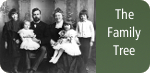
There are many other members of the Hemingway clan (nieces, nephews, other grandchildren), but I've given you an outline here of some of the major players. For a family tree detailing the more recognized members of the Hemingway clan, see the Hemingway Family Tree.
Return to Legacy FAQ | View all FAQs
How do we explain Hemingway's
timelessness from both a social and literary perspective?
During a 1999 Hemingway conference at the JFK Library in Boston, MA,
one of the topics of discussion among the panelists was this question of Hemingway's timelessness both as writer and celebrity.
Why has this 20th century American author endured while so many others (Jack London for instance)
have disappeared into a black hole of obscurity? One speaker answered the question by saying,
"we all write through Hemingway."
Hemingway's style of writing continues to be emulated today. The old joke about 20th century writers is that they can be divided into two distinct groups: those trying to write like Ernest Hemingway and those trying not to. Hemingway's famous commentaries on the process of writing, his advice to beginners and his criticisms to his contemporaries are simply unparalleled. He is considered by many the most well recognized writer of the 20th century and perhaps the best American writer ever to put pencil to paper. Aside from his innovative style, the themes of his works are very human and enduring. From death to loss to perseverance to courage, Hemingway writes of the subjects that affect us all.
When one starts to read a lot of Hemingway, he or she will begin to notice an element almost always lacking: the happy ending. Not only can he describe life "as it is," he is often more adept at describing life "as it is not." Life is not a bed of roses, a care-free world in which lovers walk hand and hand into a setting sunset. No, the sun also rises and if its rays are too hot or too bright or if it stays visible for too long, the roses will wilt and die. Hemingway never shies away from exploring the tragedies of life, of death, of love, of living, of dying, of loving. This I think explains much of his timeless appeal.
Though Hemingway may have represented the ideal writer in the literary sense, he certainly did not lead the life of seclusion and isolation so commonly associated with the professional writer. Hemingway's life was exciting. He presented to the world both a colorful and contradicting personality. He was the outdoorsman. He hunted, he fished, he drank, he brawled, he traveled, he married. He was a man who truly enjoyed life. He made those around him enjoy life. When he could no longer enjoy his life, when his body failed him, when his gift for writing deserted him, he ended his life. This final act would only add to the timeless Hemingway mystique.
I am reminded of the Public Broadcasting Service, an organization that takes great pride in creating what they themselves call "non disposable television," which is television that a person can come back to again and again. The same thing might be said of Ernest Hemingway's literature. It too is "non disposable." One can reread Hemingway and always find something new and compelling. This does not apply to every author. One of Hemingway's major criticisms against fellow writer William Faulkner was the immense difficulty of rereading him.
Return to Legacy FAQ | View all FAQs
On what magazine covers has Hemingway appeared?
Quite a few. Note that some of these covers are
merely artist renditions of Hemingway.
If you know of any covers that have been overlooked, please contact Timeless Hemingway.
Return to Legacy FAQ | View all FAQs
How has Hemingway been commercialized?
In 1992, the Hemingway sons established Hemingway, Ltd. for the purpose of licensing
their father's name and image. From this venture has come a vast selection of products.
Ernest Hemingway has his own line of clothing (yes, pajamas too), furniture, hunting gear, fishing tackle, pens (he wrote in pencil), and how could one forget the adorable teddy bear (manufactured by Boyds Bears) dressed in a hunting vest and hat and christened with the name, "Hemingway K. Grizzman." There is also a house design in Hemingway's name, and would you believe, a wallpaper in the so-called style of Hemingway. Other items that have been scheduled for possible release include pillows, desk sets, African masks, and picture frames. As Scott Donaldson notes in Hemingway vs. Fitzgerald: The Rise and Fall of a Literary Friendship: "According to Marla A. Metzner, president of Fashion Licensing of America, thirteen separate manufacturers have opted to use Hemingway's name and image in connection with their products."
Moving onto the bookshelves: when it comes to biographies, Hemingway truly is "the undisputed champion." More than a dozen biographies have been written about him. Add to that, the dozen or so memoirs authored by close friends and relatives. The legacy that Hemingway himself would likely be most proud of is the fact that the majority of his work is still in print. Worldwide sales of his books show that he remains a powerful literary force. Despite the vast commercialization of his name and image, Hemingway is remembered as a writer first and foremost. The photo of a hairy forearmed middle aged man pounding away at the keys of his typewriter working on his 1940 masterpiece, For Whom the Bell Tolls is still fresh in the minds of many. Though someday that photo may be replaced by another. Perhaps it already has.
Return to Legacy FAQ | View all FAQs
How popular is Hemingway on the web?
In 2001, Timeless Hemingway published an article exploring Hemingway's presence and position in the online community.
You can read the article here: Ernest Hemingway: Alive and Well Online.
Return to Legacy FAQ | View all FAQs
Are there any Hemingway blogs online?
Timeless Hemingway maintains a blog that is
titled One True Sentence. It is updated on a monthly basis.
David Gagne also maintains a Hemingway blog. It is appropriately titled The Hemingway Blog.